Table of Contents
1.0 Executive Summary
1.1 Business Overview
1.2 Vision and Mission Statement
1.3 Key Objectives
1.4 Products and Production Capacity
1.5 Market Opportunity
1.6 Competitive Advantage
1.7 Financial Highlights
1.8 Funding Requirements
1.9 Implementation Timeline
2.0 Company Overview
2.1 Company Name and Legal Status
2.2 Ownership and Management Structure
2.3 Business Location and Facilities
2.4 Core Values and Strategic Goals
2.5 Corporate Social Responsibility (CSR) Commitments
3.0 Product Description and Manufacturing Process
3.1 Product Range (PP, HDPE, and Woven Sack Bags)
3.2 Raw Materials and Sourcing
3.3 Manufacturing Process Flow
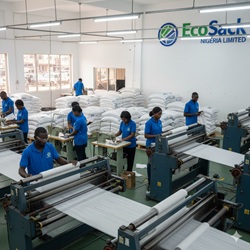
3.4 Production Technology and Equipment
3.5 Quality Control and Packaging Standards
3.6 Product Differentiation and Innovation
4.0 Industry Analysis
4.1 Overview of the Nigerian Packaging and Manufacturing Industry
4.2 Market Trends and Growth Drivers
4.3 Value Chain Analysis
4.4 Policy and Regulatory Environment
4.5 Technological and Environmental Factors
5.0 Market Analysis
5.1 Market Overview and Size
5.2 Demand and Supply Dynamics
5.3 Market Opportunities and Growth Potential
5.4 Consumer Behavior and Purchase Patterns
5.5 Key Challenges in the Industry
6.0 Target Market and Customer Segmentation
6.1 Primary Market Segments
• FMCG Manufacturers
• Agricultural Producers and Exporters
• Cement and Building Material Firms
• Retailers and Logistics Companies
6.2 Customer Profiles and Buying Motivations
6.3 Market Share Estimates
6.4 Geographic and Sectoral Focus (Lagos and Southwest Nigeria)
7.0 Competitive Analysis
7.1 Overview of Key Competitors (Local and Regional)
7.2 SWOT Analysis (Strengths, Weaknesses, Opportunities, Threats)
7.3 Competitive Positioning Strategy
7.4 Strategic Partnerships and Distribution Alliances
8.0 Marketing and Sales Strategy
8.1 Branding and Positioning Strategy
8.2 Pricing Model and Credit Policy
8.3 Sales Channels (Direct, Wholesale, and Export)
8.4 Advertising and Promotion Strategy
8.5 Customer Relationship Management (CRM)
8.6 Three-Year Sales Forecast (Units and Revenue)
9.0 Operational Plan and Facility Layout
9.1 Production Site Description and Layout Design
9.2 Machinery and Equipment Requirements
9.3 Staffing and Human Resource Plan
9.4 Procurement and Inventory Management
9.5 Logistics and Supply Chain Workflow
9.6 Production Schedule and Capacity Utilization
10.0 Legal and Regulatory Requirements
10.1 Business Registration (CAC Nigeria)
10.2 Permits and Licensing (SON, NESREA, LASEPA)
10.3 Environmental Impact Assessment (EIA)
10.4 Workplace Health and Safety Regulations
10.5 Insurance and Risk Compliance Checklist
11.0 Startup Cost and Funding Plan
11.1 Capital Expenditure (CAPEX) Breakdown
11.2 Operating Expense (OPEX) Estimate
11.3 Total Startup Cost Summary Table
11.4 Funding Sources and Structure (Equity, Loans, Grants)
11.5 Capital Utilization Plan
12.0 Financial Plan and Projections (Part 1)
12.1 Revenue Forecast (5-Year Projection)
12.2 Profit and Loss Statement
12.3 Cash Flow Projections
12.4 Assumptions and Key Drivers
12.5 Financial Commentary and Interpretation
13.0 Financial Plan and Projections (Part 2)
13.1 Projected Balance Sheet
13.2 Financial Ratios (Liquidity, Profitability, Efficiency, Solvency)
13.3 Break-even Analysis
13.4 Sensitivity Analysis (Scenario Testing)
13.5 Investment Return Summary and Graphs
14.0 Risk Analysis and Mitigation Strategies
14.1 Key Business Risks
14.2 Market, Operational, and Financial Risks
14.3 Risk Mitigation Measures
14.4 Contingency Planning Framework
15.0 Sustainability and Expansion Strategy
15.1 Environmental Sustainability (Recycling, Waste Reduction)
15.2 Economic and Social Impact (Job Creation, CSR)
15.3 Expansion and Diversification Plans (Regional and Export Growth)
15.4 Long-term Vision for Growth and Innovation
16.0 Implementation Timeline and Milestones
16.1 Project Launch Phases
16.2 Key Milestones (Setup, Testing, Production, Marketing)
16.3 Timeline Gantt Chart (12–24 Months)
16.4 Monitoring Metrics for Progress Evaluation
17.0 Monitoring and Evaluation (M&E) Plan
17.1 Monitoring Objectives and Key Indicators
17.2 Evaluation Tools and Frequency
17.3 Reporting Framework
17.4 Performance Review and Feedback Loop
18.0 Conclusion and Recommendations
18.1 Strategic Summary
18.2 Key Success Drivers
18.3 Investment Attractiveness and ROI Outlook
18.4 Final Recommendations
19.0 Appendices
19.1 Startup Cost Summary Table
19.2 Five-Year Sales Forecast Chart
19.3 Profitability Graphs
19.4 Compliance Documents (CAC, SON, LASEPA, Insurance)
19.5 Key References and Data Sources
1.0
Executive Summary
1.1 Business Overview
EcoSack Nigeria Limited is a proposed Lagos-based
manufacturing company specializing in the production of durable, eco-friendly
sack bags used for packaging agricultural produce, cement, animal feed, grains,
and general-purpose storage. The business seeks to meet Nigeria’s rising demand
for affordable and sustainable packaging solutions while reducing the country’s
reliance on imported polypropylene (PP) and jute sacks.
The company will manufacture woven polypropylene
(WPP) sacks and biodegradable variants, serving both industrial and retail
markets. Located in Ogun–Lagos Industrial Corridor (likely in Ikorodu or
Agbara), the factory will leverage modern extrusion, weaving, and lamination
technology to ensure product quality, cost efficiency, and scalability.
1.2
Mission Statement
To provide high-quality, eco-friendly sack bags that meet diverse packaging
needs while contributing to Nigeria’s sustainable industrial development.
1.3
Vision Statement
To become Nigeria’s leading manufacturer of sustainable sack bags within five
years, recognized for innovation, reliability, and environmental
responsibility.
1.4
Objectives
- To achieve annual production
of 10 million sacks by the third year of operation.
- To capture at least 5% of
the Lagos and Southwest Nigeria packaging market by 2027.
- To maintain a gross profit
margin above 40% and achieve operational breakeven within 18 months.
- To promote environmental
sustainability through the adoption of recyclable and biodegradable
materials.
1.5
Products and Services
EcoSack Nigeria Limited will manufacture and distribute:
- Woven Polypropylene Sacks
(25kg–100kg capacity) – for cement, grains, and fertilizer
industries.
- Biodegradable Sacks – made from eco-plastic
blends for environmentally conscious clients.
- Custom Printed Sacks – for branding and
packaging by FMCGs, farmers, and traders.
- Bag Design and Printing
Services –
custom logo printing and lamination.
1.6
Market Opportunity
Nigeria’s packaging and agro-allied industries are growing rapidly, with annual
sack bag demand estimated above 500 million units. Import substitution
opportunities exist, as more than 60% of sacks used in Nigeria are imported
from Asia. With Lagos as the commercial hub, EcoSack Nigeria Limited will
target key markets in Lagos, Ogun, Oyo, and the northern distribution centers
via partnerships with agro dealers, FMCGs, and distributors.
1.7
Competitive Advantage
- Localized production and
faster delivery times than imported alternatives.
- High product durability and
customization options.
- Strategic factory location
close to ports and major highways.
- Experienced management and
technical team with expertise in plastics and industrial packaging.
- Strong brand positioning
focused on eco-conscious and quality-driven production.
1.8
Business Model
Revenue will be generated through B2B supply contracts, wholesale distribution,
and direct factory sales. EcoSack Nigeria Limited will implement a hybrid model
— producing for bulk industrial clients while distributing through agents and
wholesalers to small and medium enterprises.
1.9
Funding Requirements
The total startup capital required is estimated at ₦180 million,
allocated as follows:
- Factory setup and equipment:
₦110 million
- Working capital: ₦30 million
- Licensing and regulatory
fees: ₦5 million
- Marketing and distribution
setup: ₦15 million
- Contingency and operational
reserve: ₦20 million
The
business seeks ₦120 million in equity investment and ₦60 million in
debt financing.
1.10
Financial Highlights (Projection Summary)
|
Financial Indicator
|
Year 1
|
Year 2
|
Year 3
|
|
Revenue
(₦ million)
|
85
|
190
|
320
|
|
Gross
Profit (₦ million)
|
34
|
85
|
142
|
|
Net
Profit (₦ million)
|
12
|
39
|
77
|
|
Net
Margin (%)
|
14%
|
20%
|
24%
|
|
ROI (%)
|
—
|
18%
|
32%
|
1.11 Exit
Strategy
The exit options for investors include management buyout, equity sale to larger
packaging manufacturers, or expansion through mergers with FMCG packaging firms
after five years.
1.12
Implementation Timeline
- Month 1–3: Facility acquisition,
licensing, and equipment procurement.
- Month 4–6: Installation, recruitment,
and pilot production.
- Month 7–12: Market entry and
distribution network establishment.
- Year 2–3: Capacity expansion, product
diversification, and regional distribution.
2.0 Company Overview
2.1
Company Name: EcoSack Nigeria Limited
2.2
Business Structure:
Private Limited Liability Company (RC to be obtained upon incorporation).
2.3
Location:
Proposed factory site: Ikorodu Industrial Estate, Lagos State, with easy
access to distribution routes linking Lagos, Ogun, and the Southwest region.
2.4
Ownership Structure:
EcoSack Nigeria Limited will be owned by three partners with combined
experience in industrial packaging, plastics engineering, and business
management:
- Mr. Akinwale Johnson
(Managing Director/CEO) – 45% equity
- Mrs. Chidinma Eze
(Operations Director) – 35% equity
- Mr. Yusuf Adedeji (Finance
& Marketing Director) – 20% equity
2.5
Nature of the Business:
The company is a manufacturing enterprise involved in the production of
high-quality sack bags — primarily woven polypropylene (WPP) sacks and biodegradable
alternatives — for use in packaging agricultural commodities, construction
materials, and general storage.
2.6
Business Model:
EcoSack operates a B2B and B2C hybrid model. The company will sell directly
to manufacturers (cement producers, feed mills, grain merchants, and fertilizer
companies) under contractual agreements and also distribute through wholesalers
and dealers across Lagos, Ogun, Oyo, and the northern supply chains.
2.7
Vision Statement:
To be the leading producer of eco-friendly and affordable sack bags in West
Africa.
2.8
Mission Statement:
To produce durable, sustainable, and innovative sack bag solutions that meet
global packaging standards and promote environmental responsibility.
2.9 Core
Values:
- Quality: Commitment to superior
product standards.
- Sustainability: Use of recyclable and
biodegradable materials.
- Integrity: Transparent and ethical
operations.
- Innovation: Continuous improvement in
design and process.
- Customer Focus: Meeting and exceeding
client expectations.
3.0 Product Description
3.1
Product Range
EcoSack
Nigeria Limited will manufacture and supply the following product categories:
|
Product Type
|
Material
|
Target Market
|
Features
|
|
Woven
Polypropylene (WPP) Sacks
|
Polypropylene
yarns
|
Cement,
grains, fertilizers
|
Lightweight,
strong, reusable
|
|
Laminated
WPP Sacks
|
Polypropylene
+ BOPP film
|
FMCGs,
branded food producers
|
Moisture-proof,
printable surface
|
|
Biodegradable
Sacks
|
Bioplastic
blends (PLA, starch)
|
Eco-conscious
clients
|
Compostable,
non-toxic
|
|
Customized
Printed Sacks
|
WPP or
Bioplastic
|
Businesses
needing branding
|
Full-color
logo printing, lamination
|
|
Bulk
Industrial Bags (Jumbo Sacks)
|
Heavy-duty
polypropylene
|
Construction
and logistics firms
|
500–1000kg
capacity, high tensile strength
|
3.2 Production Process and Technology
EcoSack
Nigeria Limited will deploy a semi-automated production line integrating
extrusion, weaving, lamination, cutting, and stitching operations. The process
flow is as follows:
- Extrusion:
- Polypropylene (PP) granules
are melted and extruded into flat tapes or fibers.
- These tapes form the
structural base for woven sack fabrication.
- Weaving:
- The extruded tapes are
woven using circular looms to produce tubular fabric rolls.
- These rolls are tested for
tensile strength and uniformity.
- Lamination (Optional):
- A thin BOPP or PE film is
laminated to improve moisture resistance and printability.
- Laminated sacks are
preferred for fertilizer, rice, or branded products.
- Printing:
- High-speed flexographic
printing machines are used for multi-color logos, brand names, and
product details.
- Cutting and Stitching:
- Woven rolls are cut into
desired lengths and stitched at the bottom with automatic sewing
machines.
- Handles or liners (if
required) are attached during this stage.
- Quality Control:
- Every batch undergoes
tensile, puncture, and load-bearing tests.
- Random sampling ensures
compliance with ISO 21898 packaging standards.
- Packaging and Dispatch:
- Finished sacks are bundled,
labeled, and packed for dispatch to clients and distributors.
3.3 Equipment and Machinery
|
Equipment
|
Function
|
Estimated Cost (₦)
|
|
PP
Extrusion Line
|
Converts
raw PP into tapes
|
35,000,000
|
|
Circular
Looms (6 units)
|
Weaves
PP tapes into fabric
|
24,000,000
|
|
Lamination
Machine
|
Adds
moisture protection and print layer
|
12,000,000
|
|
Flexographic
Printing Machine
|
Multi-color
branding and design
|
10,000,000
|
|
Cutting
& Stitching Units
|
Finishes
sacks to required size
|
8,000,000
|
|
Compressor
and Power Backup
|
Continuous
operation and maintenance
|
5,000,000
|
|
Quality
Control Tools
|
Testing
and inspection equipment
|
3,000,000
|
|
Miscellaneous
Equipment
|
Conveyors,
bag bundlers, palletizers
|
5,000,000
|
Total
Machinery Investment: ≈ ₦102
million
3.4 Technology and Production Capacity
The
factory will use Indian and Chinese-origin machinery, offering:
- Daily capacity: 30,000
standard 50kg sacks per 10-hour shift.
- Annual production: approx.
9–10 million sacks at full capacity.
- Automation level: 70%
(semi-automated system with human supervision).
- Waste reduction: <5% via
in-line recycling of offcuts and PP scrap.
3.5 Research and Development (R&D)
EcoSack
Nigeria Limited will maintain a small R&D unit focused on:
- Testing biodegradable resin
alternatives.
- Developing UV-resistant
sacks for tropical conditions.
- Creating customizable
designs for SME packaging clients.
Click “DOWNLOAD NOW” below to get the complete Business Plan
FOR QUICK HELP CHAT WITH US NOW!
+(234) 0814 780 1594



Login To Comment