ABSTRACT
The seminar report
on smart grid technologies in Nigeria offers a comprehensive exploration of the
current landscape, challenges, and future prospects in the context of Nigeria’s
energy sector. It highlights the need for infrastructure upgrades, diversified
funding sources, tailored regulatory frameworks, and heightened cybersecurity
measures. The report emphasizes the importance of consumer engagement, the
integration of renewable energy sources, and advanced grid management. It also
suggests supporting electric vehicle infrastructure and encouraging state-level
initiatives.
TABLE OF CONTENTS
CERTIFICATION
ii
ACKNOWLEDGEMENT
iii
DEDICATION iv
ABSTRACT
v
TABLE OF
CONTENTS
vi
CHAPTER ONE:
INTRODUCTION
1
1.1 BACKGROUND STUDY 1
1.2 SMART GRID TECHNOLOGIES 2
1.2.1 KEY
COMPONENTS OF SMART GRID TECHNOLOGIES 3
1.3 POWER SYSTEMS
IN NIGERIA
7
1.4 OBJECTIVES OF
THE REPORT
10
CHAPTER TWO:
LITERATURE REVIEW
11
2.1 STUDY
REVIEW
11
CHAPTER THREE:
SMART GRID IMPLEMENTATION IN NIGERIA 14
3.1 CURRENT STATUS OF SMART GRID TECHNOLOGIES IN NIGERIA 14
3.2 CASE STUDIES OF SUCCESSFUL SMART GRID PROJECTS IN NIGERIA
15
3.3 CHALLENGES AND OBSTACLES FACED IN IMPLEMENTING SMART GRIDS IN NIGERIA 16
3.4 FUTURE
PROSPECTS AND BENEFITS 17
3.5 SMART GRID AND
THE TRADITIONAL POWER GRID
18
CHAPTER FOUR:
CONCLUSION AND RECOMMENDATIONS 21
4.1
CONCLUSION
21
4.2
RECOMMENDATIONS 21
REFERENCES
23
CHAPTER ONE
INTRODUCTION
1.1 BACKGROUND STUDY
In an era marked
by increasing energy demands, environmental concerns, and the pursuit of
sustainable development, the integration of advanced technologies into our
power infrastructure has become a paramount global priority. Smart grid
technologies represent a revolutionary paradigm shift in the field of energy
management, promising enhanced efficiency, reliability, and sustainability.
This seminar report delves into the intriguing landscape of smart grid
technologies in the context of Nigeria, a country facing a unique set of energy
challenges and opportunities.
Nigeria, as the
most populous nation in Africa and an emerging economic powerhouse, is at a
pivotal juncture in its energy history. This report is a comprehensive
exploration of the current state of smart grid implementation in Nigeria,
featuring a rich tapestry of success stories, challenges, and a forward-looking
analysis of future prospects. With a focus on the interplay between innovation
and practicality, we seek to shed light on how smart grid technologies are
poised to transform the Nigerian energy sector.
Throughout the
report, we will navigate the intricacies of smart grids, examine case studies
of successful projects, and identify the formidable challenges that lie ahead.
Moreover, we will unveil the potential benefits of smart grid adoption,
including economic growth, environmental stewardship, and improved energy
access. By the end, it is hoped that this exploration will provide valuable
insights and recommendations for stakeholders, policymakers, and industry
players, contributing to the realization of a smarter, more sustainable energy
future for Nigeria.
1.2
SMART GRID TECHNOLOGIES
Smart grid
technologies refer to the advanced and intelligent electrical grid systems that
use information and communication technologies (ICT) to improve the efficiency,
reliability, and sustainability of power distribution and consumption. (IEA,
2020) These technologies enable utilities and consumers to monitor, control,
and optimize the grid in real-time, leading to a more efficient and responsive
power system.
Smart grid
technology is a multifaceted system revolutionizing the electrical grid by
optimizing its efficiency and reliability. Its operational process is a
well-orchestrated synergy of data collection, analysis, automation, and
adaptive control mechanisms.
The core of smart
grid operation lies in data collection and communication. An extensive network
of sensors, meters, and communication infrastructure collects real-time data on
electricity generation, consumption, and grid conditions. Smart meters, a
pivotal component, record detailed consumer usage data and transmit it back to
utility companies.
Once collected,
the data undergoes rigorous analysis through advanced software and algorithms.
This analytical insight provides grid operators with valuable information on
consumption patterns, grid congestion, and potential faults. This real-time
data-driven decision-making and forecasting empower grid management.
Automation is
another fundamental element. Smart grids employ automation to efficiently
manage and control the grid. In cases of power line issues or faults, the
system can automatically reroute power, isolate problem areas, and swiftly restore
power to unaffected regions. This minimizes downtime and boosts grid
reliability.
Smart grids
seamlessly integrate renewable energy sources like solar panels and wind
turbines. They manage the variability of these sources through forecasting and
flexible power distribution. Excess energy can be stored for future use,
reducing waste.
Demand response
programs enable consumers to adjust electricity usage based on price signals or
grid conditions, reducing peak demand and avoiding blackouts. Grid resilience
and self-healing capabilities allow quick identification of affected areas and
rerouting of power during natural disasters or disturbances.
Ensuring grid
security, cybersecurity measures are implemented, safeguarding the
communication network and grid infrastructure from potential cyber threats.
Furthermore, smart
grids excel in load balancing and optimization, efficiently matching power
supply with real-time demand, thus reducing energy waste and ensuring a stable
grid.
In summary, the
working process of smart grid technology is an intricate and interconnected
system where data, automation, and advanced control mechanisms merge. This
comprehensive approach improves grid efficiency while promoting sustainability
and resilience, playing an active role in the transition towards a more
reliable and sustainable energy future.
1.2.1 KEY COMPONENTS OF SMART
GRID TECHNOLOGIES
The key components
of smart grid technologies encompass various elements that work together to
enhance the efficiency, reliability, and sustainability of electrical power
systems. These components include;
- Advanced Demand Forecasting:
Advanced demand forecasting utilizes data analytics and machine learning
(ML) techniques to generate forecasting reports, employing autoregressive
integrated moving average (ARIMA) and various statistical methods. As an
integral part of managing the smart grid, ARIMA forecasting predicts
annual electricity consumption and hourly electricity prices. ARIMA
forecasting also serves as an additional layer of verification to identify
potential cyber intrusion attacks on the smart meters used for measuring
electricity consumption among both residential and commercial consumers.
- Advanced Metering Infrastructure (AMI): Advanced metering infrastructure (AMI) is an integrated system
of communication networks, data management systems, and smart meters that
helps improve customer service and energy efficiency and manage costs
effectively. By enabling two-way communication with the customers and the
utilities, AMI provides a smart grid with a broad range of benefits, such
as consumption forecast, effective cash collection and theft detection,
fault and outage detection, loss measurements, and time-based
pricing.
- Big Data: Smart grid data has three
core aspects, i.e., high velocity, large volume, and a wide variety.
Managing this with limited resources is a challenge. Big data analytics
enhances asset utilization, efficiency, reliability, and customer
satisfaction. It’s crucial for processing the vast data from smart grid
devices, promoting cost efficiency and better customer service.
- Distributed Energy Resources (DERs): Distributed energy resources (DERs) boost local energy supply,
grid stability, and fuel use. DERs encompass electric vehicles, solar
panels, small natural gas generators, and controllable loads like water
heaters and HVAC systems. Integrating DERs enhances grid service quality
and reliability. For instance, photovoltaic systems (PVs) convert sunlight
into electricity using the photovoltaic effect and an inverter. PVs reduce
utility bills by decreasing grid-provided electricity costs.
- Non-intrusive Load Monitoring (NILM): Non-intrusive load monitoring (NILM) or non-intrusive
appliance load monitoring (NIALM) identifies the individual energy
consumption of households and industrial facilities. Breaking down the
aggregate energy consumption (of active appliances) into components and
providing diagnostic information is useful for identifying
energy-consuming or malfunctioning appliances. Furthermore, consumers can
schedule the most cost-effective time to use energy-intensive appliances
and monitor and manage energy expenses according to their power
consumption.
- Vehicle-to-Grid (V2G): Also known
as vehicle-grid integration (VGI), vehicle-to-grid (V2G) technology
transfers unused power from a vehicle into the smart grid. An electric
vehicle (EV) battery is a cost-efficient form of energy storage. V2G helps
balance electricity consumption spikes and reduce overload on the power
grid during peak hours. For example, V2G can feed energy (unused battery
capacity) back to the power grid from an electric car’s battery to improve
grid stability and maximize the benefits of renewable energy.

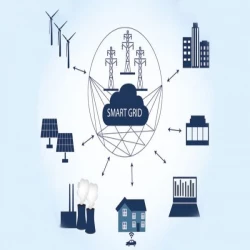
Figure 1.1: Schematic diagram illustrating key components of Smart grid system
1.2 POWER SYSTEMS IN NIGERIA
An electric power
system, also known as an electrical grid or power grid, is a vast network of
interconnected electrical components and infrastructure that generate,
transmit, and distribute electricity to meet the energy needs of society. It
encompasses the entire system responsible for the generation, transmission, and
distribution of electric power.
In Nigeria, Power
is generated from various sources, including thermal, hydroelectric, and
renewable energy plants. The generated electricity is then transmitted over
long distances through a network of transmission lines operated by the
Transmission Company of Nigeria (TCN). The transmission system steps up the
voltage to minimize losses during long-distance transmission. At distribution
substations, the voltage is stepped down, and distribution companies (DisCos)
take over the responsibility of delivering electricity to end-users, such as
residential, commercial, and industrial consumers.
The Nigerian 330
kV transmission grid is marked by significant power losses attributed to the
extensive transmission lines. Notable among these lines are Benin to Ikeja West
(280 km), Oshogbo to Benin (251 km), Oshogbo to Jebba (249 km), Jebba to
Shiroro (244 km), BirninKebbi to Kainji (310 km), Jos to Gombe (265 km), and
Kaduna to Kano (230 km). (Patrick et al., 2013).
Distribution
networks consist of distribution lines and transformers that further reduce the
voltage for safe consumption. The end-users are connected to the distribution
network through service lines, allowing them to access electricity for various
purposes, including powering appliances, lighting, and machinery. Power losses
lead to reduced power availability for consumers, resulting in insufficient
energy to operate appliances. Therefore, the power system’s high efficiency is
contingent on its minimal power losses. Elevated power demand pushes both the
power transmission and distribution networks to their capacity limits,
potentially causing a shortened network lifespan or total system collapse.
The transmission
system in Nigeria does not cover every part of the country. Presently, it has
the capacity to transmit a maximum of approximately 4,000 MW but is technically
weak, making it highly susceptible to significant disturbances. Noteworthy
issues related to transmission systems comprise insufficient funding from the
Federal Government, incomplete coverage across the nation, and a maximum
electricity wheeling capacity of 4,000 MW, which falls significantly short of
the national requirements. (Patrick et al., 2013).
 Figure 1.2: Map showing the transmission lines in Nigeria

Figure 1.3: Schematic diagram
illustrating the transmission lines in Nigeria
1.2
OBJECTIVES OF THE REPORT
The objectives of
this report can be summarized as to:
- Provide an in-depth analysis of smart grid technologies,
- Evaluate the current status of smart grid implementation in
Nigeria,
- Offer actionable recommendations for industry stakeholders, and
government agencies to enhance the adoption and effectiveness of smart
grid technologies in Nigeria.
Click “DOWNLOAD NOW” below to get the complete Seminar
FOR QUICK HELP CHAT WITH US NOW!
+(234) 0814 780 1594
Buyers has the right to create
dispute within seven (7) days of purchase for 100% refund request when
you experience issue with the file received.
Dispute can only be created when
you receive a corrupt file, a wrong file or irregularities in the table of
contents and content of the file you received.
ProjectShelve.com shall either
provide the appropriate file within 48hrs or
send refund excluding your bank transaction charges. Term and
Conditions are applied.
Buyers are expected to confirm
that the material you are paying for is available on our website
ProjectShelve.com and you have selected the right material, you have also gone
through the preliminary pages and it interests you before payment. DO NOT MAKE
BANK PAYMENT IF YOUR TOPIC IS NOT ON THE WEBSITE.
In case of payment for a
material not available on ProjectShelve.com, the management of
ProjectShelve.com has the right to keep your money until you send a topic that
is available on our website within 48 hours.
You cannot change topic after
receiving material of the topic you ordered and paid for.



Login To Comment